| Getting your Trinity Audio player ready... |
Introduction
“How do I increase foot traffic in my retail store”, is one of the most searched questions related to retail on the web.
Although we posted some tips to increase store traffic in the past (here and here), I feel most articles, including the ones we made before, end up listing many points that are not real needle movers. These kinds of tips will cost a lot of time & money and may not yield any results, especially if you have fundamental problems.
Hence, I decided to pick three concepts that will really make a difference.
Let’s jump right in.
1. Location, Location, Location...and Your Local Market and Your Target Customer...
Other articles might start with points like ensuring you have eye-catching signage—but let’s be real, signage won’t do diddly-squat if you’ve picked the wrong location and have zero traffic. So, let’s begin with the one factor that will ensure a 50% increase in foot traffic to your store doesn’t still end up being zero.
In the world of physical retail, location isn’t just important—it’s everything. Imagine setting up your dream store in the heart of Emptyville, right off the bustling No-One Highway. Unless you’ve crafted an out-of-this-world experience or your latest viral video has everyone flocking to your door, you’re more likely to see tumbleweeds than customers.
Choosing a location based on personal preference—like opening a shop in your quaint hometown that you rightfully love and deciding to sell very niche artisanal hand-carved wooden tree figurines just because it’s your passion—can be a recipe for disaster. As charming as your creations may be, if the local market isn’t large enough or interested enough, your sales (or lack thereof) will reflect that harsh reality.
Next, are you trying to save on rent by setting up shop in the farthest corner of town? That’s how you end up running a store that no one visits. Accessibility is key—without it, all the flashy signage and marketing tricks in the world won’t save you.
Speaking of rent, landlords love long-term leases. They’ll dangle five or even ten-year leases in front of you, but signing one in the wrong location? That’s a one-way ticket to regret town. Research shows that poor location choices are a huge reason why 41.7% of retail businesses fail within their first five years (Commerce Institute). If you’re not certain about the area, lock in a shorter lease. It might just save your business.
Before committing to a lease, dig into local market research. What’s the general traffic around the area? What does the demographic data look like, is it a match with your offering? Any competitor nearby? A prime location might cost more, but if it puts you right in front of your target customers, it’s worth every penny.
Executive summary: Make sure that what you’re selling is actually in demand and that your store is in the right location so that it is accessible to enough potential customers.
2. Be Special and Stay Focused
Let’s do something different and start with the executive summary this time: Want to increase your store traffic? Find what will make your store special and go all-in on it.
This uniqueness can come from various factors: an exclusive product line, an immersive in-store experience, or even an unconventional store design. I don’t know… but you should. You need to identify what sets your store apart and channel your resources—both time and money—into amplifying these strengths. Said another way, you need to own what makes you different and double down on it.
It’s easy to fall into the trap of trying to do everything. Trust me, I’ve been there while running SMS Storetraffic (stories for another time!). Trying to be everything to everyone usually just makes you…average. And average doesn’t get people in the door. Instead, businesses that focus on what makes them unique tend to thrive—like retailers who personalize the shopping experience, which see a 10-15% boost in sales conversion rates (McKinsey & Company).
Consider the success stories of brands like Trader Joe’s and Costco. Despite operating on different scales and offering distinct shopping experiences, both have cultivated a loyal customer base by emphasizing their unique strengths. Trader Joe’s, with its curated selection and neighbourhood store vibe, and Costco, with its bulk offerings and membership model, have each carved out a niche in the market. Their focus on core strengths has been instrumental in their sustained success (Credit to Effective Retail Leader).
Oh, and it’s probably not too late, if your store is struggling, it might be time to reassess and realign with what makes you special. This could involve refining your product offerings, revamping the in-store experience, or even rebranding to better communicate your unique value proposition. Maybe you lost track of your original vision, motivated by all these suggested best practices you found online or heard others promote on social media (yes, I have some personal experience there, too).
Whatever it is, you should ensure that you invest your energy and money into activities and improvements that fit with what makes your store special. You’ll naturally increase foot traffic to your retail store by focusing on what makes you unique. When your target customers love it, they’ll come back—and bring their friends.
This is very similar to the personal development philosophy of focusing on strengths. Many of us have made the mistake of trying to improve all our weaknesses, spreading ourselves too thin in the process. But time and again, research shows that doubling down on strengths leads to much better outcomes. The same applies to your store: pick your battles, stick to them, and make sure you know what is going to make you special—and then focus on it relentlessly.
3. Just Make Sure You Are Found
I am no marketing guru, but I understand one thing: When—not if—people search for what makes you unique, they have to find you.
How sad is it when you’re craving sushi, but the best sushi place in town isn’t the first suggestion by Google — or ChatGPT at this point? It’s bad for you, and worse for the never-to-be customer who will never have the chance to experience your store.
You can’t ignore the fact that people now search online before they leave their house. They’ll compare 10 stores, check reviews, and may even get a bunch of online shopping options instead. You need to be visible—but visible to the right, high-intent customers.
Let’s take a simple example: You sell shoes. Maybe you run an amazing shoe store specializing in kids’ shoes, offering the best experience for both parents and children. You might want to appear if someone searches “shoe store” online, but that’s a broad, short-tail keyword. Your store will compete with every shoe store in a wide area, including online marketplaces and major retailers like Amazon. Plus, the intent isn’t clear. Maybe the user is just browsing for fun?
Now, if someone types “Best shoe store for kids near me,” – a long-tail keyword – that’s a much more focused, high-intent search. The “near me” part signals urgency. That’s where you want to show up. You also want to make sure the text the customer sees when you show up confirms that you’re the perfect match and highlights your uniqueness. Your store’s entire online presence—from search results to ad text, your Google Business listing, and your website—should all align with that intent.
That should get you an increase in foot traffic. Even better? It’s likely going to be the right traffic for your store, buying traffic, meaning your chances of converting them are much higher.
Now, if marketing is not your strength, that’s okay, but I highly recommend seeking out someone who can make this happen.Your presence in those results should reassure the customer that you’re a perfect fit — and ideally go one step further by emphasizing what sets your store apart.
Conclusion:
To recap, although I am sure there are many tips to move the needle on traffic, these three are the ones that should move the needle the most, the ones that really have the potential to be game changers.
Choose the right location, be unique and focused, and make sure the right people can find you. Otherwise, you risk turning your store into a ghost store—open, but serving no one.
–Patrick Thuot, President SMS Storetraffic

Store Traffic Counting Solutions Made Easy for Small Retailers.
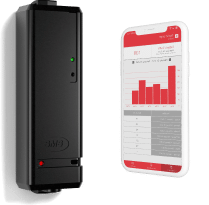
Related guide: The best people counters for retail (2026) — nine systems compared on published prices, accuracy guarantees, install reality and five-year cost.