| Getting your Trinity Audio player ready... |
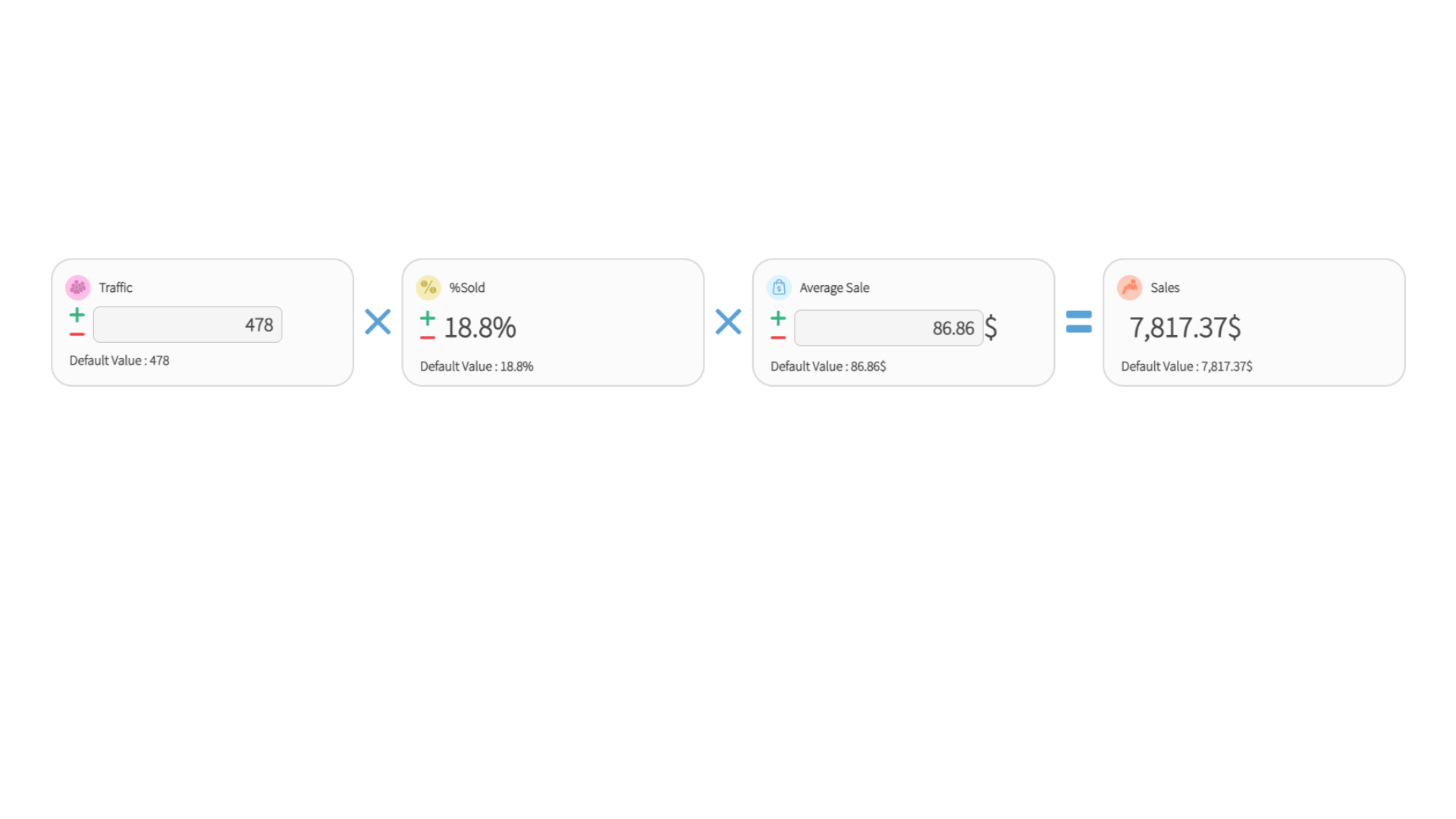
The Retail Equation is a retail performance formula that shows how store traffic, conversion rate, and average sale combine to create total sales.
Traffic × Conversion Rate × Average Sale = Total Sales
Watch the original video explanation of the Retail Equation
Retail Equation definition
The Retail Equation is a simple retail sales formula that explains total sales as the result of three performance drivers: store traffic, conversion rate, and average sale.
The formula is:
Store Traffic × Conversion Rate × Average Sale = Total Sales
Another way to understand the formula:
Transactions = Store Traffic × Conversion Rate
Total Sales = Transactions × Average Sale
Retailers use the Retail Equation to understand where sales growth should come from. A store may need more visitors, better conversion, a higher average transaction value, or a combination of all three. Traffic analytics makes this possible by showing how many sales opportunities entered the store before a sale happened.
What is traffic in the Retail Equation?
Traffic is the number of people who enter a retail store during a specific period.
Store traffic matters because every visitor represents a potential sales opportunity. If sales are down, the first question is whether fewer shoppers came into the store. Without traffic analytics, a retailer may mistake a traffic problem for a sales team problem.
For example, if a store had 1,000 visitors last week and 800 visitors this week, sales may be down simply because the store had fewer sales opportunities.
What is conversion rate in the Retail Equation?
Conversion rate is the percentage of store visitors who make a purchase.
The formula is:
Conversion Rate = Transactions ÷ Store Traffic
If 100 people enter a store and 10 people buy, the conversion rate is 10%.
Improving conversion means turning more existing visitors into customers. Common conversion levers include better staffing, stronger service, improved merchandising, product knowledge, and a better in-store experience.
What is average sale in the Retail Equation?
Average sale is the average amount a customer spends per transaction. It is also called average transaction value.
The formula is:
Average Sale = Total Sales ÷ Transactions
If a store makes $1,000 from 10 transactions, the average sale is $100.
If traffic and conversion are healthy, average sale may be the next growth opportunity. Retailers can increase average sale through relevant add-ons, product recommendations, bundles, or helping customers find a more complete solution.
How does the Retail Equation work?
The Retail Equation works by showing how small changes in traffic, conversion rate, or average sale affect total sales.
For example, a store with 100 visitors, a 10% conversion rate, and a $100 average sale generates $1,000 in sales.
| Scenario | Traffic | Conversion Rate | Transactions | Average Sale | Total Sales |
|---|---|---|---|---|---|
| Baseline | 100 | 10% | 10 | $100 | $1,000 |
| More traffic | 110 | 10% | 11 | $100 | $1,100 |
| Better conversion | 100 | 11% | 11 | $100 | $1,100 |
| Higher average sale | 100 | 10% | 10 | $110 | $1,100 |
In each scenario, total sales increase by $100, but the source of growth is different.
That is why the Retail Equation is useful. It helps retailers see whether growth should come from attracting more shoppers, converting more visitors, or increasing the value of each transaction.
Why does traffic analytics matter?
Traffic analytics matters because sales data alone does not explain why sales changed.
Sales reports show the final result. Traffic data shows how many shoppers entered the store and how many opportunities the team had to convert visitors into buyers.
When retailers connect traffic analytics with conversion rate and average sale, they can identify which lever needs attention.
If traffic is low, the opportunity may be marketing, local visibility, store presentation, or events.
If traffic is strong but conversion is low, the opportunity may be staffing, service, merchandising, or product availability.
If traffic and conversion are strong, the opportunity may be increasing average sale through add-ons, bundles, or better product recommendations.
How can retailers use the Retail Equation simulator?
Retailers can use a Retail Equation simulator to test how changes in traffic, conversion rate, and average sale affect total sales.
The SMS Storetraffic mobile app includes a Retail Equation simulator that helps retailers compare different growth scenarios. A retailer can test what happens if store traffic increases, if conversion improves, or if average transaction value goes up.
This makes traffic analytics easier to use in day-to-day retail decisions. Instead of guessing why sales changed, retailers can test different scenarios and see which performance lever has the biggest impact.
Retail Equation FAQ
What are the three parts of the Retail Equation?
The three parts of the Retail Equation are store traffic, conversion rate, and average sale. Store traffic shows how many people entered the store, conversion rate shows how many visitors became buyers, and average sale shows how much each buyer spent.
Is average sale the same as average transaction value?
Yes. In the Retail Equation, average sale and average transaction value usually mean the same thing: the average amount spent per transaction.
How do you calculate retail conversion rate?
Retail conversion rate is calculated by dividing the number of transactions by the number of store visitors.
Conversion Rate = Transactions ÷ Store Traffic
For example, if 100 people visit a store and 10 people make a purchase, the conversion rate is 10%.
Why can sales go down even if conversion rate improves?
Sales can go down even if conversion rate improves when store traffic drops or average sale decreases. For example, a store may convert a higher percentage of visitors, but if far fewer people enter the store, total sales may still decline.
Why is store traffic important for retail sales?
Store traffic is important because it represents the number of sales opportunities available to the store. Without traffic data, retailers only see the final sales result, not how many chances the team had to convert shoppers into customers.
Key takeaway
The Retail Equation helps retailers find the clearest path to sales growth.
More sales can come from more traffic, better conversion, or a higher average sale. Traffic analytics is the foundation because it shows how many sales opportunities entered the store in the first place.
Use the SMS Storetraffic mobile app to test Retail Equation scenarios and turn traffic data into clearer retail decisions.

Store Traffic Counting Solutions Made Easy for Small Retailers.
Remotely monitor your store traffic performance with iOS/Android app.