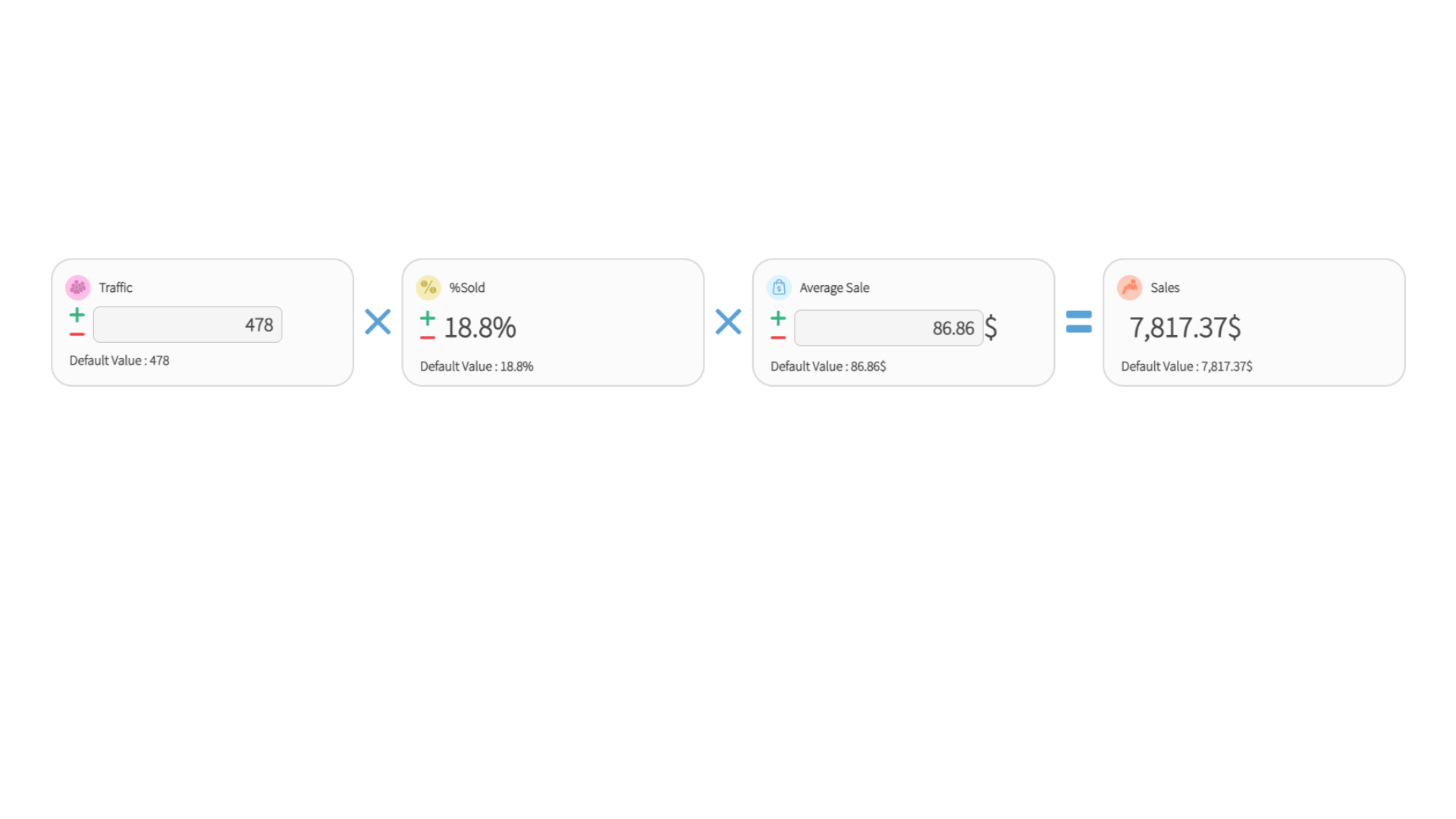
At most B2B trade shows, exhibitors have no real way of knowing how many people walked past their booth versus how many actually stopped. Most never find that out. They pack up, tell their sales manager “we were busy,” and book the same show again next year on gut feeling alone. Alexandre Gauvin, who runs SoyXpert and its tofu brand SoyKey out of Sherbrooke, Quebec, decided gut feeling wasn’t good enough, so he mounted a camera 13 feet in the air and started counting. What he found: more than half of passersby stopped at his booth, and a large share of them stayed long enough for a real conversation.
How Do You Know If a Trade Show Booth Is Actually Working?
Most exhibitors have no percentage to put on booth performance. Gauvin didn’t either, until he mounted a camera 13 feet above his SoyKey booth and started counting everyone who walked past. That count is a number no exhibitor gets from memory or vibes alone. Without it, exhibitors fall back on whether the booth “felt busy,” whether staff were run off their feet, or whether a few good conversations happened, none of which translates into something you can show a distributor.
Booth staffing costs money, travel costs money, and choosing which shows to return to next year is a real budget decision. Without data, that decision comes down to memory and vibes. Gauvin wanted something closer to what an in-store retailer already gets from a people counter at the door: an actual count of who came in, and for how long they stayed.
Why Did a Tofu Maker Build His Own People-Counting Rig First?
Gauvin built his own people-counting rig first because he assumed sourcing parts from Alibaba and using ChatGPT to write tracking code would be faster and cheaper than buying a commercial system. It wasn’t: hauling a full computer setup to a trade show booth, keeping it powered, and trusting it not to fail mid-show was not a serious option for someone who needed to focus on selling tofu, not debugging hardware.
While researching which sensor or reader to buy for his own DIY build, Gauvin’s search led him to Storetraffic instead of the parts he was originally looking for. He also compared other commercial people-counting systems on the market. Most relied on cellular or Bluetooth connectivity, came bundled with more complexity than he needed, and cost more than made sense for a temporary booth setup. The 3D Scope II LC stood out because it only needed an internet connection, no fixed wiring, no permanent fixture, just a camera and a network link he could bring himself.
What Does It Take to Mount a People Counter Above a Trade Show Booth?
Most trade show venues cap booth height at 8 feet and restrict placing anything directly in front of the booth space, which ruled out a standard booth-mounted camera for the overhead view Gauvin needed. His answer was a custom pole rig, 13 feet tall, built in four collapsible pieces with a telescoping arm so it could pack down and travel between shows.
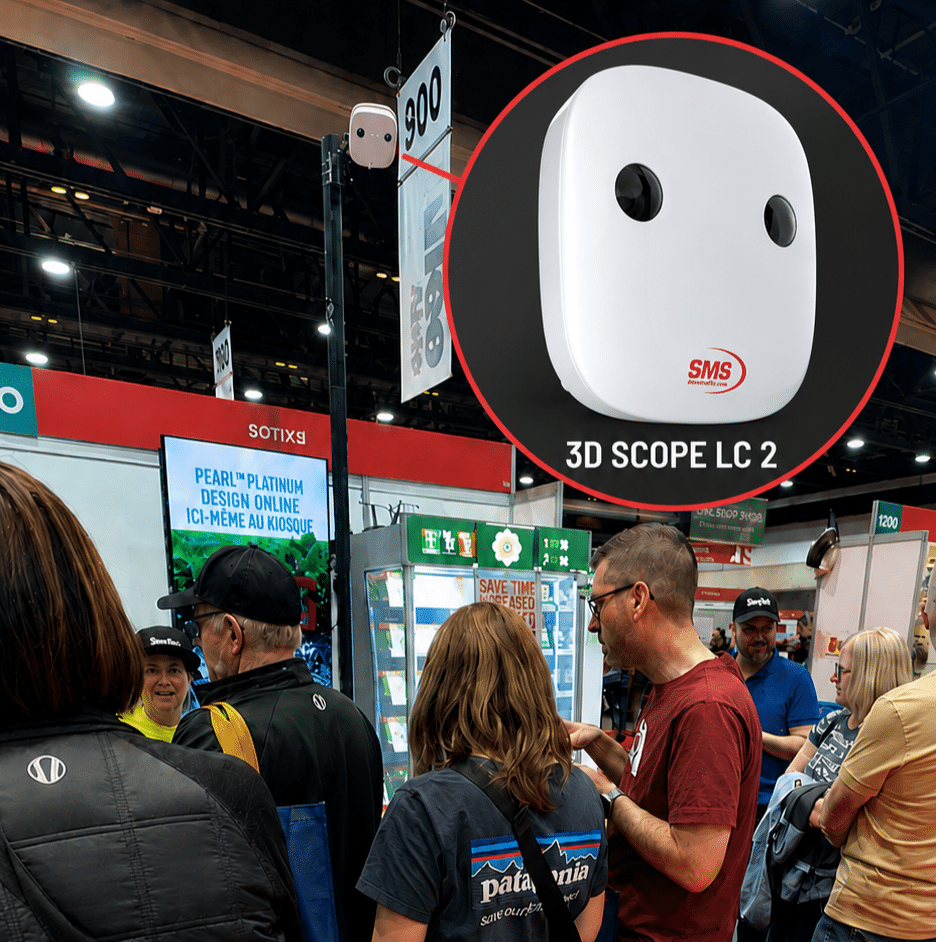
Show organizers weren’t immediately comfortable with a camera pointed at the crowd, and asked what Gauvin planned to do with the footage before approving the setup. Gauvin’s answer was straightforward: the 3D Scope II LC does spatial counting, not identification. It can distinguish an adult from a child by height, but it isn’t capturing faces or tracking individuals. Once organizers understood that distinction, they signed off, and Storetraffic’s own team confirmed this was the first time a customer had used the product mounted this way at a trade show.
Can You Measure Dwell Time With a System That Only Counts Entries and Exits?
Not directly: the 3D Scope II LC tracks entries and exits at a single point, which tells you how many people crossed a line but not how long they lingered once inside, so Gauvin had to engineer a workaround. For a trade show booth, dwell time is arguably the more useful number: a visitor who walks past in two seconds is a very different data point from one who stays for three minutes talking to a rep.
Gauvin’s workaround was to layer multiple detection zones at the same physical entry and exit point, each with a different delay threshold. He set four thresholds: 10 seconds, 1 minute, 2 minutes, and 3 minutes. By exporting the counts from each threshold and subtracting one from the next, he could approximate how long groups of visitors actually stayed. It was an engineered approximation rather than a built-in feature, and it worked well enough to produce numbers he trusted.
How Is This Data Changing SoyXpert's Distributor Pitches?
The output of that workaround was two numbers Gauvin didn’t have before: at one show, more than half of everyone who walked by the booth stopped, and a large share of those who stopped stayed long enough for a real conversation rather than a glance. He’s kept the exact figures for his own sales deck, but the shape of the result is the point: instead of telling a prospective distributor that SoyXpert “did a lot of trade shows,” he can show a real stop rate and a real dwell rate tied to a specific event.
Distributors evaluate a lot of pitches, and most of them are built on the same kind of soft language Gauvin used to rely on himself; a hard number, even a rounded one, separates a claim from a story. He now treats trade show data the same way a retailer treats in-store foot traffic data: as evidence a partner can actually check against.
Where Is This Data Headed Next?
Next, Gauvin plans to pair reliable, trained staff with the same traffic and dwell data at in-store tasting demonstrations, so results depend less on any one person’s rapport and more on numbers he can check. He also wants to eventually import sales figures to correlate foot traffic directly with lift.
The same camera setup also surfaced a separate problem at a B2B agricultural trade show: his sales reps were spending so long with each visitor who did stop that they were missing much of the crowd walking past, a gap worth knowing before deciding how a sales team’s time gets spent at the next show.
Gauvin is also rethinking sampling strategy broadly: giving away a physical portion of tofu is cheaper than a paper coupon once redemption fees are factored in, and it prompts action right away instead of a coupon that often goes unused.
Gauvin has suggested that convention centers and exhibition halls could install these systems permanently and sell the traffic data back to exhibitors as part of a booth package. Whether or not venues pick that up, the underlying lesson holds for any business running a temporary footprint: a camera, an internet connection, and a bit of engineering can turn “we were busy” into a number a distributor can actually act on.
Gauvin’s setup started with a camera and a pole, not a big IT project, which is worth remembering if your own booth data still lives in memory rather than numbers. If you’re weighing whether a system like this would work at your next show, Storetraffic offers a free demo to walk through it.